

Thousands of students across the country will be nervously waiting for their GCSE results on 20 August and thinking about what’s next, particularly if they receive disappointing GCSE results.
Here we explain everything you need to know, from when results day is, to the grading system and what options you’ve got if you don’t get the grades you were hoping for. This blog offers practical advice for both students and parents navigating this sometimes overwhelming and challenging time.
When is GCSE results day 2026?
GCSE results day takes place on Thursday 20 August. Schools will issue their own instructions on how you can collect your results. Typically, schools open early, and students will be able to collect their results from 8am onwards. However, it’s always best to check directly with your school as they may stagger collection times.
How can you collect your GCSE results?
There are several ways you can collect your GCSE results, these include collecting them in person at the school, having a friend or family member pick them up for you, or receiving them online via the Education Record App, by email, or via post.
In-Person Collection
- At school: Most students go directly to their school or exam centre from 8:00 AM onwards on results day. Do make sure to check timings, as these can different between schools.
- Support available: Teachers and staff are on site to give immediate advice if your grades aren’t as you expected.
- Picked up by someone else: You can nominate someone on your behalf to collect your results. You will need to give written permission in advance and the family member or friend will need to provide ID to collect the printed slip for you.
Remote and Digital Options
- By email or post: If you cannot attend in person, you can ask your school in advance to email or mail your results. Some schools will automatically email your results to your school email account.
- Online portals and apps: Some schools use online student portals, or have signed up for the Education Record App enabling students to access their results online.
Do you have to open your GCSE results in school?
It’s completely up to you where you open your results. You can choose to open them in school or alternatively, you can wait until you get home and open them in private. If you open them in school, you will be surrounded by teachers who can offer advice, provide support and guidance if you haven’t achieved the results you were hoping for.
Tip for students – Set some ground rules with friends and family before the big day, so you don’t get bombarded with people ringing or messaging you to find out what you got e.g. “I’ll tell you when I’m ready.”
What do the results mean?
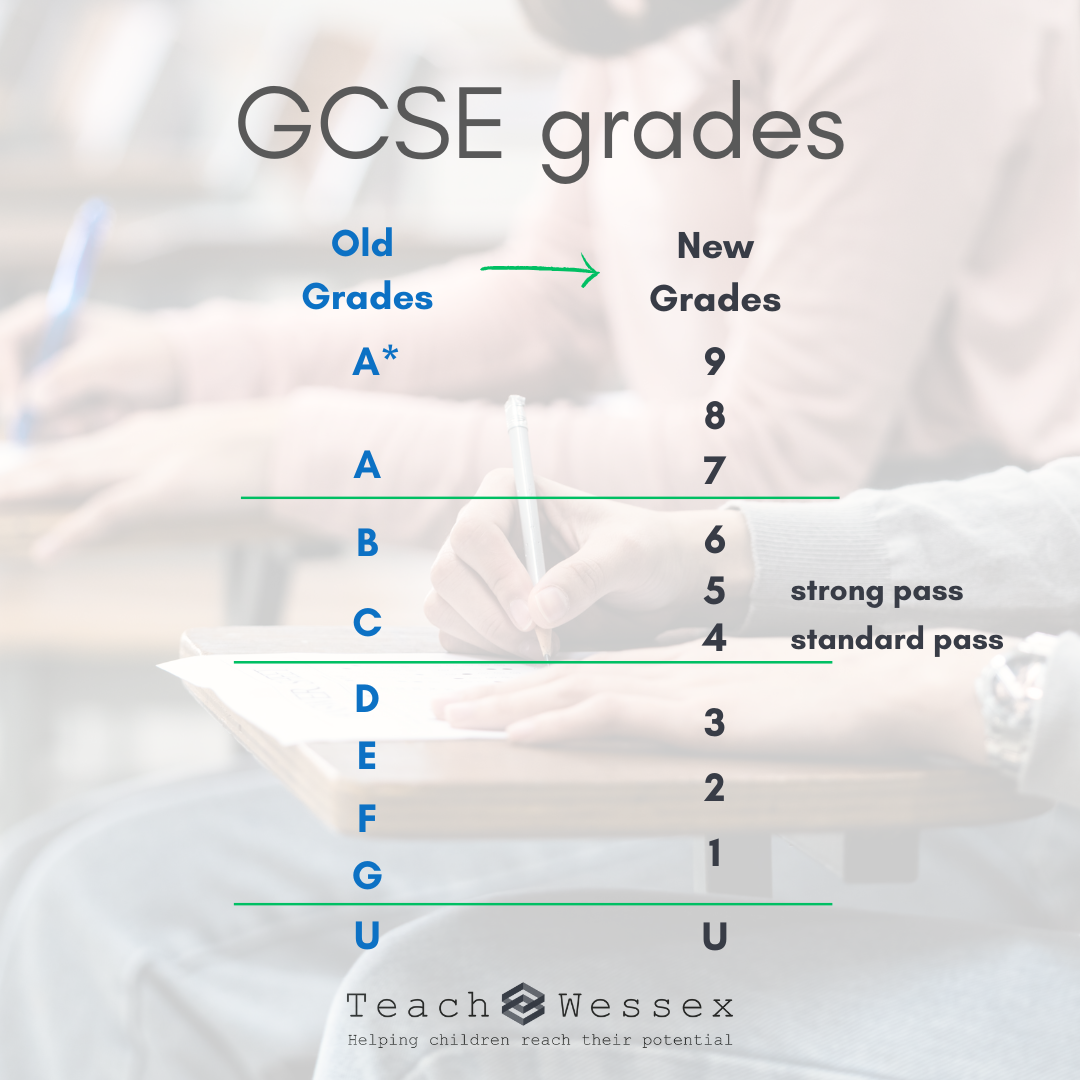
Since 2020 all GCSE results are now a number grade. These numbers run from 9, the highest grade and equivalent to the old A*, to 1 – the lowest grade, equivalent to a G.
Students need a 4 for a “standard pass” and a 5 for a “strong pass“.
Many sixth forms and colleges will insist students achieve a minimum of 5 GCSE passes to apply for their course. Some even require specific grades for the subjects’ students intend to study. This is to demonstrate that students can access the content and deal with the demands of the course. So, make sure to check if there is a minimum acceptance requirement for the courses you want to study.
What to do if your results aren’t what you expected?
Disappointing GCSE results can feel like the end of the world, particularly when you’ve worked so hard and had high hopes. But the truth is, while exam results are important, they’re not the only measure of your potential or future success. Here’s our top tips on what you can do next:
1. Allow Time to Process Your Emotions
It’s natural to feel upset, frustrated, or even embarrassed after receiving lower-than-expected grades. Give yourself time and space to process these feelings without judgment. Parents, it’s important to listen without immediately jumping to solutions. Give your teen time to acknowledge their disappointment.
Tip for Students: Talk to someone you trust about how you’re feeling. You’re not alone.
Tip for Parents: Avoid comparisons with other students or siblings. Focus on your child’s own unique journey.
2. Reframe the Experience
It’s easy to see disappointing results as a failure, but they can also be viewed as a learning experience. Many successful people didn’t get perfect grades but have used setbacks as motivation to grow and succeed.
Try this mindset shift:
- Instead of: “I failed.”
- Think: “This didn’t go how I hoped, but I can still move forward.”
Tip for students – if you’re feeling anxious, name:
- Five things you can see.
- Four things you can touch.
- Three things you can hear.
- Two things you can smell.
- One thing you can taste.
- Come back to your body, come back to now.
3. Explore All Options
There are many routes to success beyond traditional GCSE pathways. Whether it’s resits, college courses, apprenticeships, or alternative qualifications, there are other options available.
What to consider:
- Discuss your options with your teachers. They can help you understand the next steps and discuss all options available to you. You can also contact the sixth form or college to discuss your grades, and find out if there’s any flexibility and whether they can accept you with lower grades.
- Apply for a remark. If your grade seems wrong, you can request a review of marking. There could be a cost associated to this, but it can be refunded if your grade changes. Speak to your school to find out more.
- Retake a GCSE to improve your grade. If you’re unhappy with your grade you can also explore resists. English and Maths resits can usually be taken in November. Whereas other subjects can be taken the following summer. Speak to your school or careers adviser to explore how.
- Speak to the National Careers Service, they offer free and impartial information and advice.
- Explore alternative courses – have a look into vocational courses or apprenticeships that align with your interests/goals.
- Support services – look into support services or tutoring to help with resits if needed.
4. Make a Plan
Once your initial emotions have settled, take some time to create a realistic action plan of your next steps. Having a goal and identifying what you need to do to get there will help build confidence and momentum.
Include in your plan:
- What you want to do next.
- How you’re going to get there – step by step i.e. resits, new courses, application deadlines.
- Who can help – teachers, tutor, family members.
5. Prioritise Wellbeing
Stress and low confidence can take its toll, particularly if you have just missed out on a college place or have to reconsider which direction to go in. It’s important to care for your mental health and wellbeing during this time.
Helpful strategies:
Talk to a school counsellor or wellbeing service if you’re feeling overwhelmed.
Establish a routine that includes breaks and fun activities.
Keep active and eat well.
6. Celebrate Effort and Progress
Even if the outcome wasn’t what you hoped for, the effort you put in still matters. Recognising the hard work that went into studying, the growth that happened along the way, and the courage to face results is incredibly important. Remember to celebrate you and what you have achieved!
Tip For Parents: Remind your child that success isn’t always linear, and progress can take many forms.
Final Thoughts
Disappointing GCSE results are a bump in the road, not a dead end, even though they may feel like the end of the world at the time! With the right support, mindset, and action plan, you can bounce back stronger and more determined than ever. Remember, it’s not the setback that defines you, but how you respond to it.
You’re not alone, and there’s always a way forward.